· Hamza · SEO · 4 min read
SEO for Beginners: A Complete Guide to Search Engine Optimization (2026)
Learn the basics of SEO, including keyword research, on-page SEO, technical SEO, link building, and how to rank higher on Google.
SEO for Beginners: A Complete Guide to Search Engine Optimization (2026)
Search Engine Optimization (SEO) is one of the most valuable digital marketing skills you can learn. Whether you own a blog, business website, or online store, SEO helps you attract free traffic from search engines like Google.
In this beginner’s guide, you’ll learn what SEO is, why it matters, and the essential strategies to improve your website’s visibility.
What Is SEO?
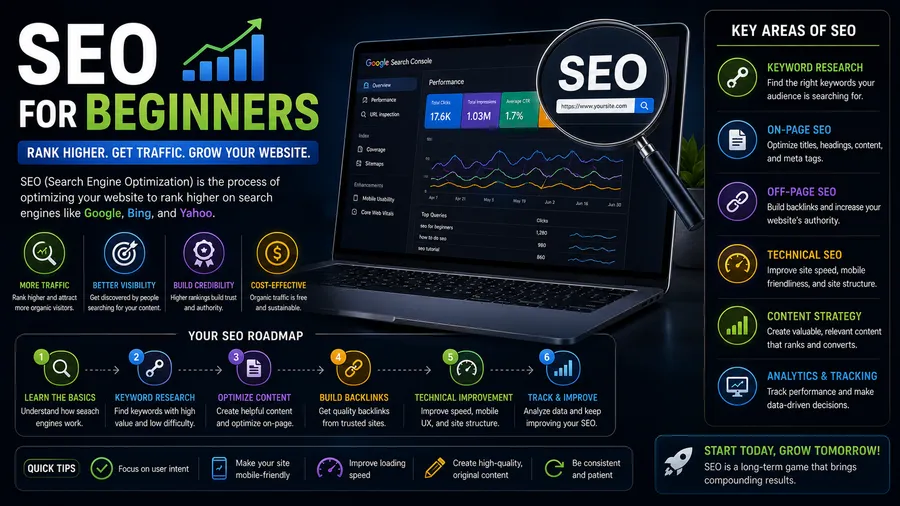
SEO (Search Engine Optimization) is the process of improving a website so it appears higher in search engine results.
The goal of SEO is to attract organic (unpaid) traffic by making your content more relevant, useful, and accessible to search engines and users.
Why Is SEO Important?
Good SEO helps you:
- Increase website traffic
- Improve online visibility
- Build trust and authority
- Generate leads and sales
- Reduce advertising costs
- Reach the right audience
Unlike paid advertising, SEO can continue driving visitors long after content is published.
How Search Engines Work
Search engines like Google follow three main steps:
- Crawling websites
- Indexing content
- Ranking pages based on relevance and quality
Your goal is to make your pages easy to discover, understand, and rank.
Keyword Research
Keywords are the words and phrases people type into search engines.
For example:
- Best AI tools
- Learn Python
- SEO guide
- Web development tutorial
Choose keywords with:
- Good search volume
- Low to medium competition
- High relevance to your content
Using the right keywords helps search engines understand your page.
On-Page SEO
On-page SEO refers to optimizing the content on your website.
Best practices include:
- Writing clear page titles
- Using descriptive headings (H1, H2, H3)
- Adding keywords naturally
- Creating high-quality content
- Optimizing images
- Writing compelling meta descriptions
- Using internal links
These improvements help both users and search engines.
Technical SEO
Technical SEO focuses on your website’s structure and performance.
Important factors include:
- Fast loading speed
- Mobile-friendly design
- HTTPS security
- XML sitemap
- Clean URLs
- Proper indexing
- Structured data (Schema)
A technically optimized site is easier for search engines to crawl and index.
Content Quality
High-quality content is one of Google’s most important ranking factors.
Good content should be:
- Original
- Accurate
- Helpful
- Easy to read
- Well organized
- Updated regularly
Focus on solving your audience’s problems rather than simply adding keywords.
Internal Linking
Internal links connect pages within your website.
Benefits include:
- Helping users navigate
- Improving crawlability
- Distributing page authority
- Increasing time on site
A strong internal linking strategy improves both SEO and user experience.
Backlinks
Backlinks are links from other websites pointing to your content.
High-quality backlinks can:
- Increase authority
- Improve rankings
- Drive referral traffic
- Build trust with search engines
Focus on earning backlinks naturally through valuable content rather than buying links.
User Experience (UX)
Google values websites that provide a positive user experience.
Improve UX by:
- Using a clean layout
- Making navigation simple
- Reducing page load times
- Ensuring mobile responsiveness
- Avoiding intrusive pop-ups
Happy users often lead to better SEO performance.
Common SEO Mistakes
Avoid these common mistakes:
- Keyword stuffing
- Duplicate content
- Slow website speed
- Broken links
- Ignoring mobile users
- Poor page titles
- Missing meta descriptions
- Publishing thin content
Fixing these issues can significantly improve your rankings.
SEO Tools
Popular SEO tools include:
- Google Search Console
- Google Analytics
- Ahrefs
- SEMrush
- Moz
- Ubersuggest
- Screaming Frog
These tools help analyze traffic, monitor rankings, and identify optimization opportunities.
SEO Best Practices
Follow these tips:
- Publish useful content consistently.
- Research keywords before writing.
- Optimize images.
- Write descriptive headings.
- Build internal links.
- Improve page speed.
- Earn quality backlinks.
- Keep content updated.
SEO is a long-term strategy that rewards consistency.
Frequently Asked Questions
How long does SEO take?
SEO results usually take several weeks or months, depending on your competition, website quality, and content strategy.
Is SEO free?
Yes. Organic SEO doesn’t require paying for clicks, but it does require time, effort, and consistent optimization.
Can beginners learn SEO?
Absolutely. With regular practice and high-quality content, beginners can build strong SEO skills and improve website rankings.
What is the most important SEO factor?
There isn’t a single ranking factor, but high-quality content, relevant keywords, page experience, and authoritative backlinks are among the most important.
Is SEO still worth learning in 2026?
Yes. SEO remains one of the most effective ways to generate long-term organic traffic and grow an online presence.
Conclusion
SEO is an essential skill for anyone who wants to grow a website, blog, or online business. By understanding keyword research, on-page optimization, technical SEO, content quality, and link building, you can improve your search rankings and attract more visitors over time.
The key to successful SEO is consistency. Publish valuable content, optimize your website, and focus on helping users. As your site’s authority grows, you’ll see lasting improvements in search engine visibility and organic traffic.